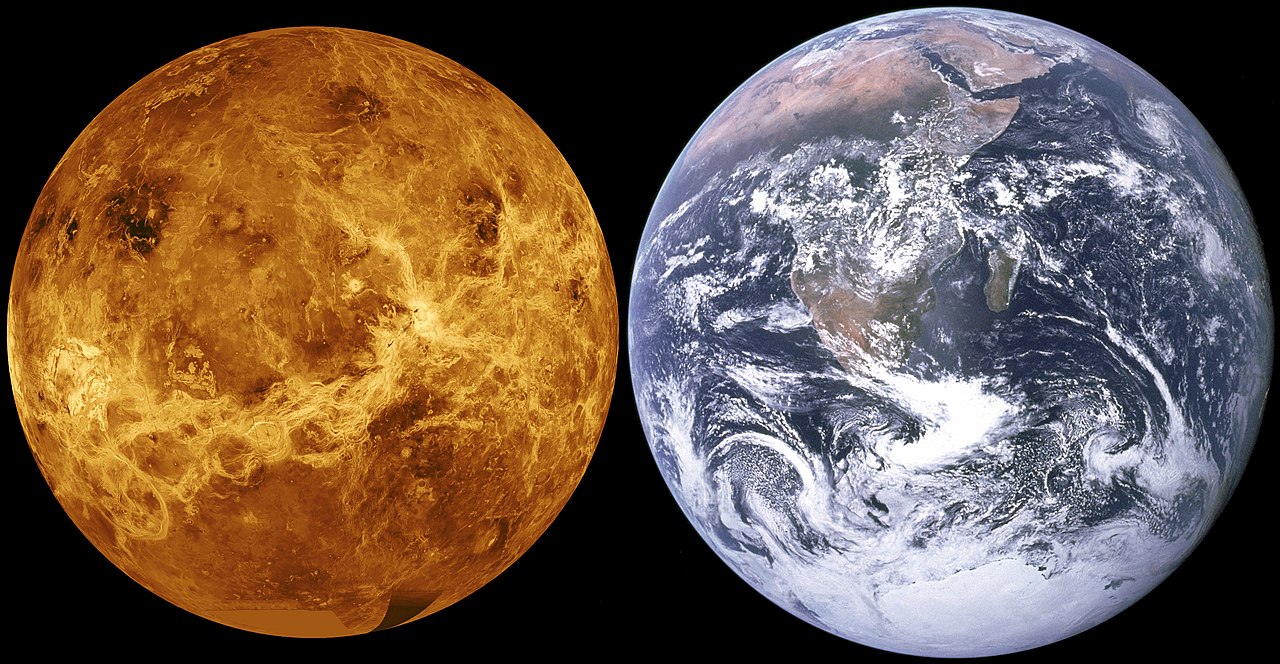

The Greeks believed Venus was two different objects — one in the morning sky and another in the evening. Because it is often brighter than any other object in the sky — except for the sun and moon — Venus has generated many UFO reports.

(See, this is why we can't live there unless in any case you wanna die so STOP ASKING!)
Venus orbits the sun every 225.7 Earth day and each day on Venus is 241 Earth days. Venus is one of the planets visible with the unaided eye. Because it has always been easy to see, it’s impossible to say who discovered Venus. In fact, after the Moon and the Sun, Venus is the brightest object in the sky. (Look closer if you can't see the last sentence!) The first person to point a telescope at Venus was Galileo Galilei in 1610. Even with his crude telescope, Galileo realized that Venus goes through phases like the Moon. These observations helped support the Copernican view that the planets orbited the Sun, and not the Earth as previously belived.
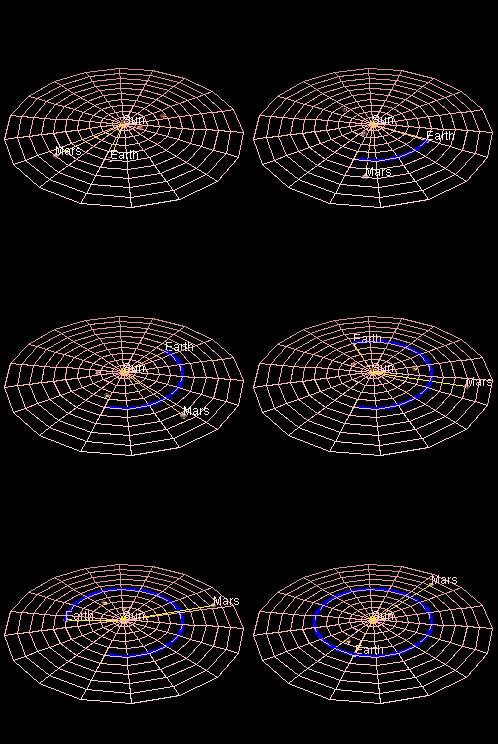
There are altogether 43 Missions that have been done and most of it are failures like losing contact and not having enough power to get out of Earth's orbit but that was before 1970, after that there were lots of success. There is a current mission called "Akatsuki" going on right now that started in 2010, it failed but scientist are going to try it again in late 2015. there will also be future missions.
Venus is a planet that contains carbon dioxide, nitrogen, sulfur dioxide, argon, water vapour, carbon monoxide, helium, neon. There are also traces of carbonyl sulfide, hydrogen chloride, hydrogen fluoride.
Most of it are carbon dioxide because Venus is a planet that doesn't have carbon cycle that puts carbon into rocks, nor does it seem to have any organic life to absorb carbon in biomass.

(This is a simple version of the carbon cycle process)
This is long enough for you guys to read and be entertain for the week. Join me next week for a closer look at Earth! But before I go take a look at the video below and listen attentively, it will help you understand more about what I had been talking about, it will also help you in your studies i guess. So long from this lazy guy!
(The Slower Version Of Periodic Table Song!)
"SOMETIMES YOU GOTTA GET REALLY HIGH TO KNOW HOW SMALL YOU ARE"

No comments:
Post a Comment